
Tanzanite buying guide
What You need to Know when buying Tanzanite

Tanzanite's Color
One Stone, Two Colors
All tanzanite has the rare ability to show two different colors at the same time: blue and violet. Tilt any tanzanite in the light and you will see this mix of colors.
This property is called "PLEOCHRISM" (literally: the ability to see many colors), and is what gives tanzanite its unique beauty and appeal.

What is the best tanzanite color?
COLOR RANGE
Tanzanite comes in a wide range of shades: from pastel sky blue and lavender all the way up to dark royal blue-violet.
Darker stones are rarer than lighter ones.
Tanzanite under 3 carats is usually lighter in color, with very dark stones rarely found in these sizes. The very darkest and richest "royal blue" color can usually only be "held" by larger stones weighing over 5 carats in size.

which tanzanite is better?
Lighter or Darker?
Pastel-colored tanzanites are far more commonly found than more richly-colored stones. About 80% of mining production is pastel in shade, from soft grayish blues to lilacs.
Vivid, more intensely colored stones occur much more rarely in nature, and are more expensive as a result. The deepest tanzanite colors only make up to 1% of the world’s total production.
Because of their beauty and comparative rarity, darker-colored tanzanites are more expensive than lighter-colored ones. The richer and more vibrant the color, the rarer and more expensive the tanzanite.
Nevertheless, a tanzanite gemstone's color intensity only reflects its rarity, not quality. Each tanzanite, no matter its color, is still incredibly rare.

What color is my tanzanite?
Is My Tanzanite Blue or Violet?
Tanzanite always displays a mix of blue and violet. However, one color will usually appear more dominant.
- If blue is the dominant color, the stone is described as blue-violet (bv)—meaning it's primarily blue with a hint of violet
- If violet is the dominant color, it's described as violet-blue (vb)—meaning it's primarily violet with a hint of blue
There is no price difference between blue- or violet-dominant stones.
Tanzanite Cut

WHAT IS THE Best Tanzanite Clarity?
CLARITY
The best clarity for tanzanite is "flawless" or "eye clean", meaning the stone has no visible inclusions or imperfections visible to the naked eye.
Stones with tiny spots or little cracks that you can see with your naked eye are sold at a discount.
The flawed tanzanite in the photo is shown for reference. Tanzanite Direct only sells flawless tanzanite.
CARAT WEIGHT VS. visible size of your stone
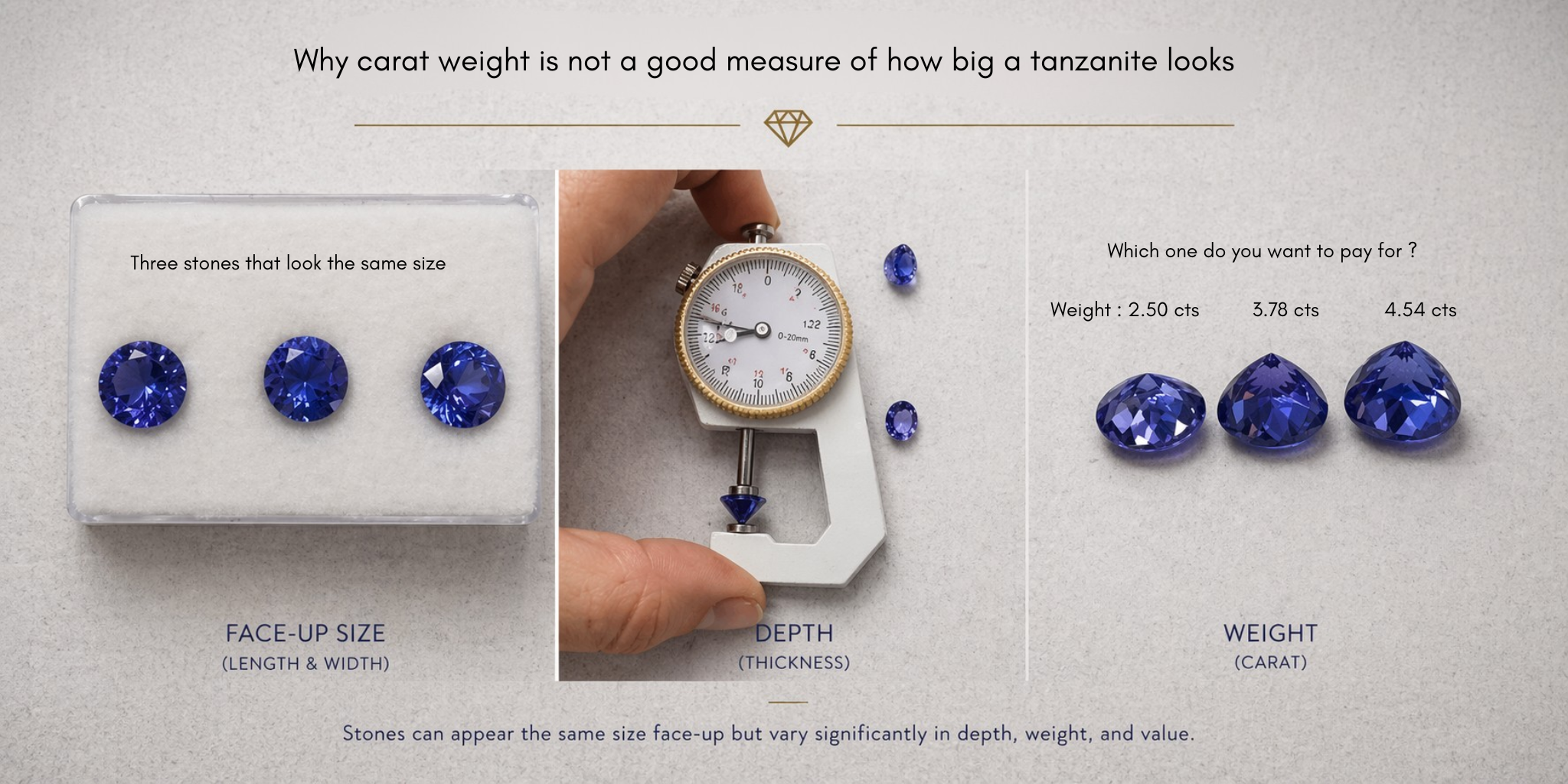
Unlike for diamonds, carat weight alone may not accurately reflect the size of your tanzanite. Because of variations in cut, it is easy for two colored stones with identical carat weight to look completely different. Thus, the best way to judge a tanzanite’s actual size is its “face-up”, or the diameter measurements of length and width.
A one-carat round tanzanite will usually measure between 5.00 to 6.00 mm in diameter. (For comparison, a one-carat round diamond will usually measure 6.5 mm.)

LIGHT SENSITIVITY
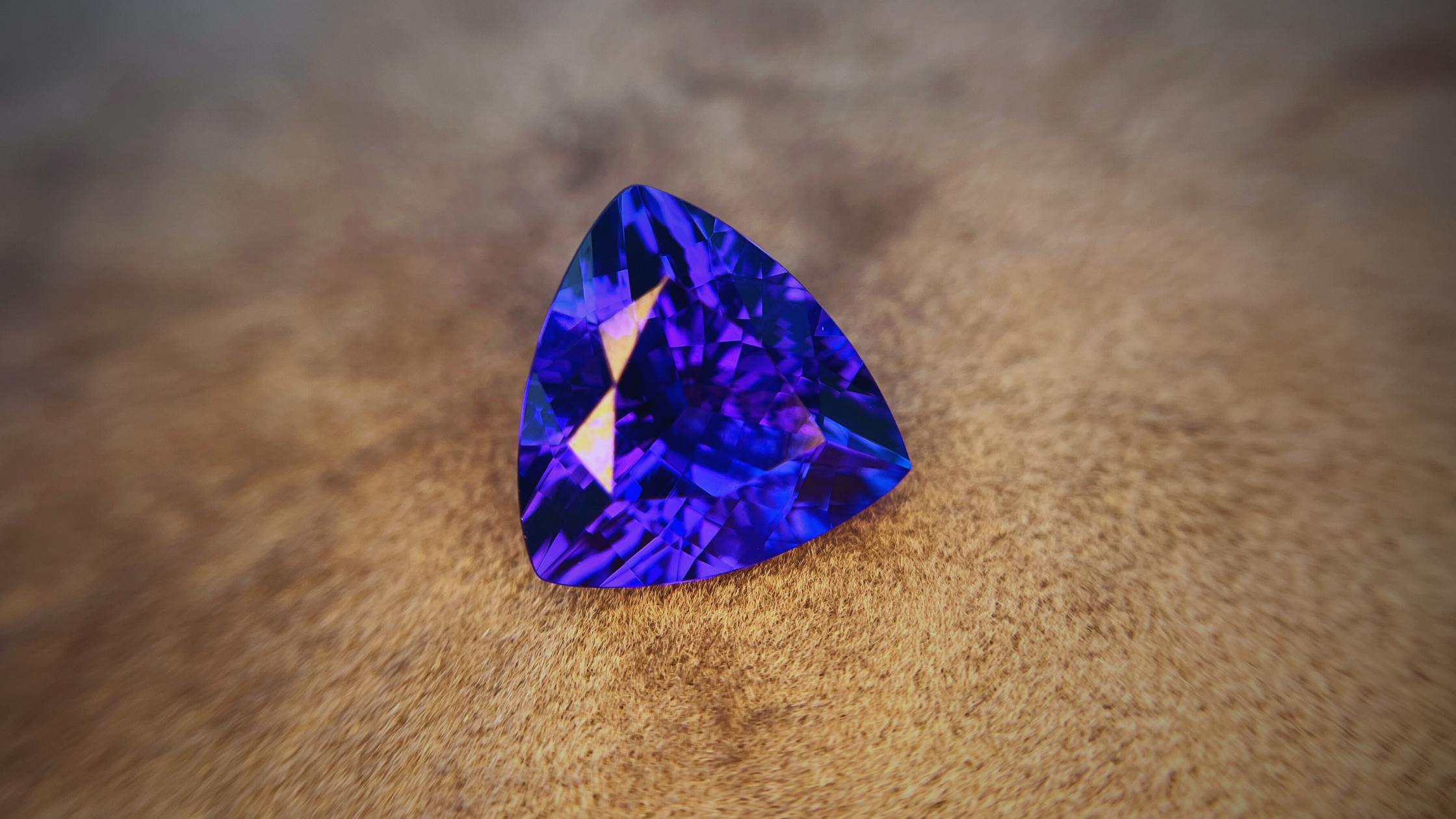
Tanzanite is light-sensitive, which is why some stones can appear dramatically different depending on the lighting conditions. Under incandescent (yellow) lighting, tanzanite often shifts towards a more violet or purplish tone, while in natural daylight, its blue hues become more prominent.
Some stones are more "moody" than others, showing stronger shifts between lighting environments. These variations do not affect the gem's value in any way but add to its "personality".
Yellow lighting

WHITE LIGHTING

BUYING TANZANITE?
Frequently Asked Questions
Is blue or violet tanzanite better?
Ultimately, it is a matter of your taste and preference. All tanzanite displays a mix of both blue and violet when viewed from different angles, and there is no price difference between blue- or violet-dominant stones.
Is your tanzanite “AAA”? / What does the “AAA” grade mean for tanzanite?
The term “Triple A” (or “AAA”) is commonly used in the gemstone trade to indicate high-quality tanzanite—but it remains an informal description.
Key Insight
In serious gem trade terms—especially at your level—AAA is still a mid-to-upper commercial grade, not the pinnacle.
For example:
- True top stones are often described using gemological shorthand like VB 6/6 (vivid, medium-dark, highly saturated) -
- These sit above typical AAA and represent the best colour and rarity
You can shop our investment grade or VB 6/6 graded stone here
Does it matter if tanzanite is heated?
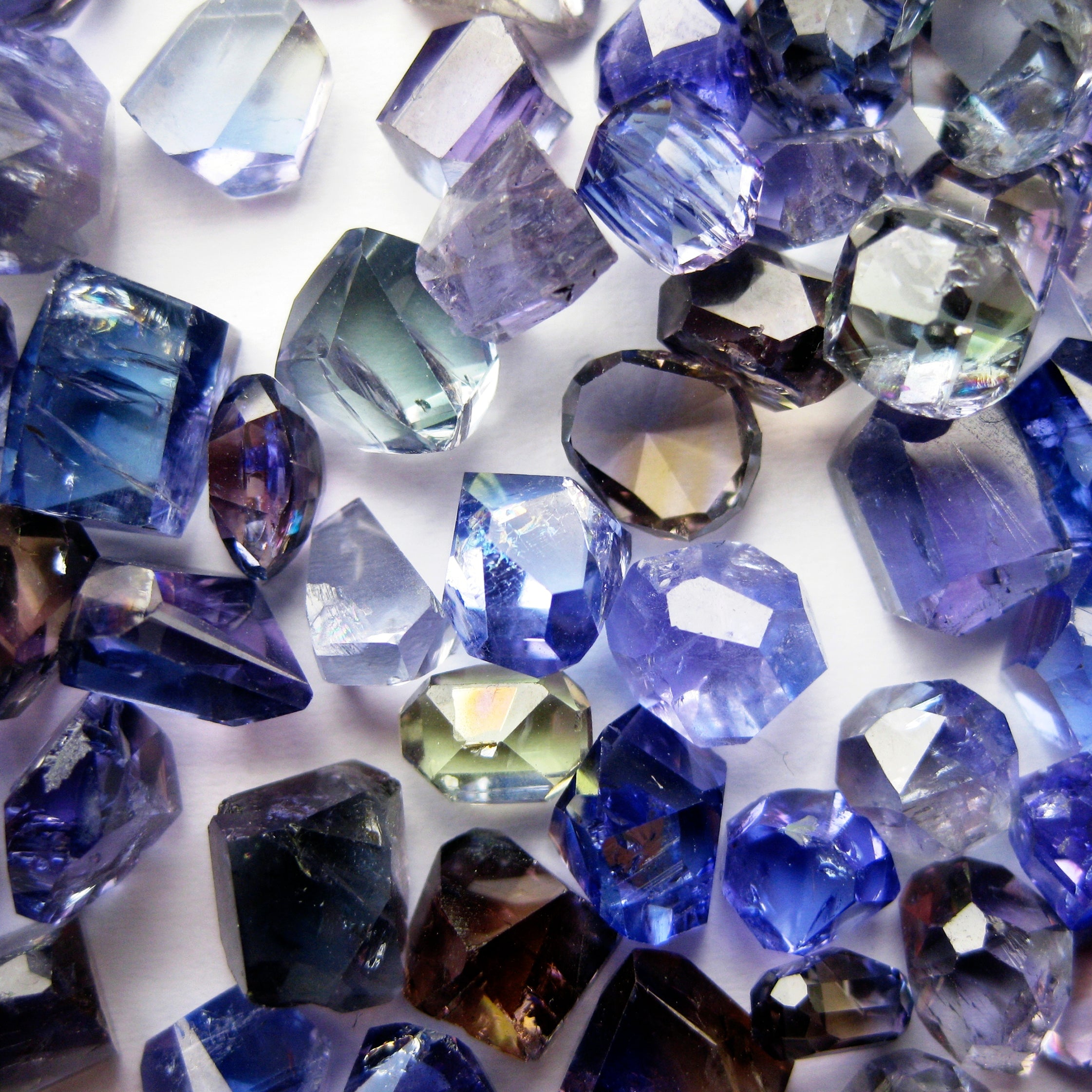
No. Nearly all tanzanite is gently heat-treated to bring out its beautiful blue-violet color, as most tanzanite is brown when it's mined. This treatment, which is accepted worldwide as standard, is permanent and doesn’t affect the stone's value. Tanzanite pricing is based on each stone's color, clarity, cut, and size.
Importantly, even top gemological labs—including the GIA—currently have no means to determine whether a tanzanite has been heat-treated or not, making any claims about "natural, unheated" color even harder to verify.

What Is “AAA” Tanzanite?
“AAA tanzanite” is a marketing and trade term for high-quality stones—but it’s not a formal grading standard.
AAA tanzanite usually means = high-quality, eye-clean, well-cut stone with strong colour
There is no universal grading scale—one supplier’s AAA may equate to another’s AA+
What “AAA” Does Not Guarantee
What “AAA” Does Not Guarantee
- It is not regulated by gemological authorities such as the Gemological Institute of America
- There is no universal grading scale—one supplier’s AAA may equate to another’s AA+
- It does not automatically indicate top-tier or investment-grade material
- There is no universal grading scale—one supplier’s AAA may equate to another’s AA+
- It does not automatically indicate top-tier or investment-grade material
Measurements VS Carat Weight
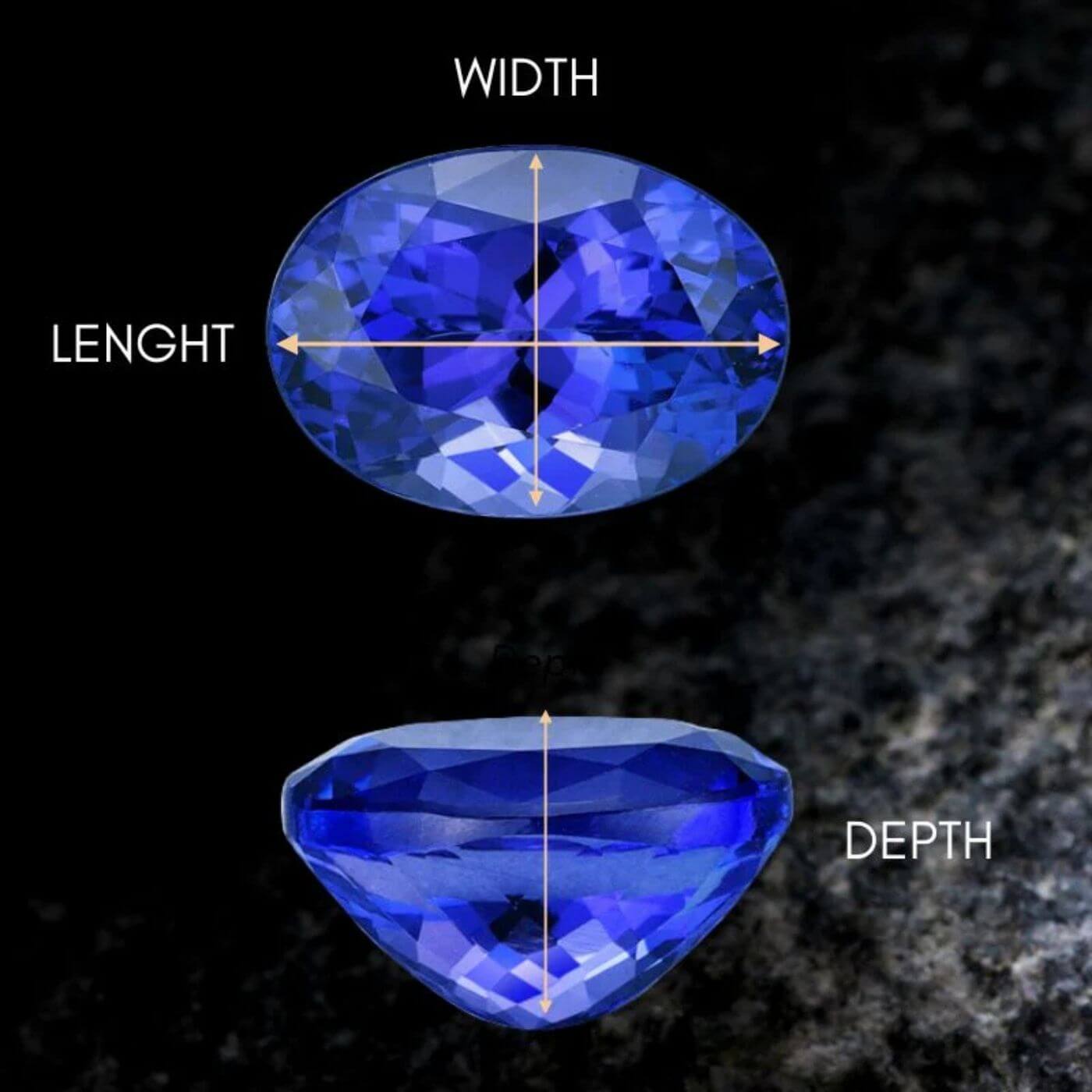
When you see "length × width" used to describe a gemstone, those values refer to the measurement of the stone’s face (the top view), given in millimeters:
- the longest dimension when looking down at the gemstone’s table (top flat surface), and
- the shorter dimension across the stone, perpendicular to the length
For example:
- 8.0 × 6.0 x 4.00 mm = 8 mm long, 6 mm wide, 4.00 mm deep
Heat Treatment Of Tanzanite
Does it matter if Tanzanite is heated?
No. Nearly all tanzanite is gently heat-treated to bring out its beautiful blue-violet color, because most of it comes out of the ground with a brownish "veil" that can be dissolved when gently heated. Heating is completely normal and accepted worldwide. The treatment is permanent and doesn’t affect the value — pricing is based on the stone’s color, clarity, cut, and size.
IS "D BLOCK" TANZANITE BETTER?
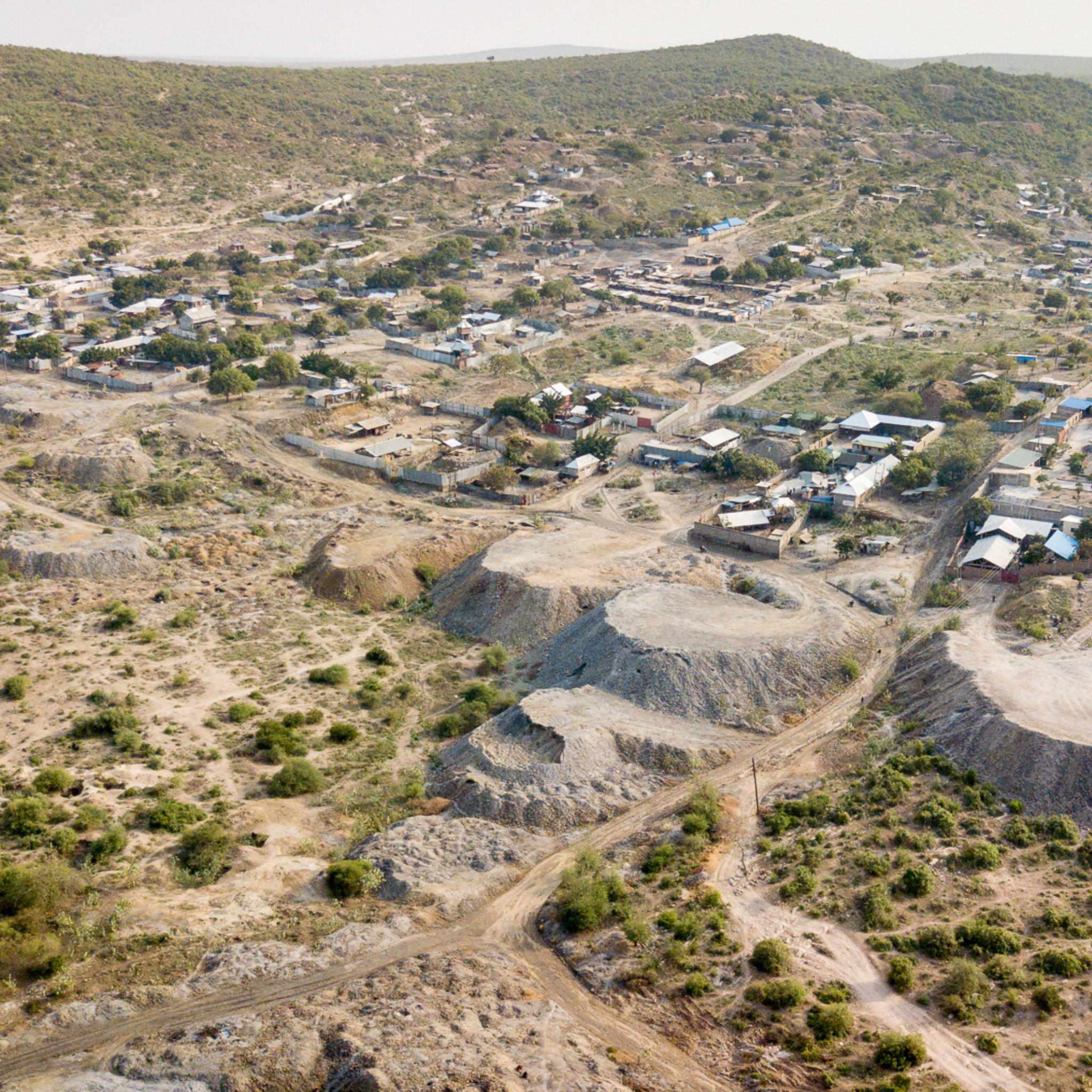
Tanzanite comes from a single small deposit in Tanzania, only eight square miles in size. The Tanzanian government divided the deposit into four sections (A, B, C, and D) for licensing purposes, but these boundaries are purely administrative, and have nothing to do with gem quality.
The entire tanzanite deposit was formed at the same time and in the same way. No existing technology or method can tell which block any individual tanzanite stone came from, and the term “D Block” is often used as a marketing gimmick.
See the Tanzanite Mining Area