
Tanzanite Cut

WHAT IS “CUT”?
A gemstone’s cut refers to its overall shape, as well as the level of skill with which the cutter has faceted and polished the stone to be brilliant and reflect light.
Unlike in the case of diamonds, there are no standard “ideal” cuts for tanzanite: each individual tanzanite crystal must be custom cut to help the finished gem display its best color and brilliance.
Expect every tanzanite on this website to be cut slightly differently to the next, as a personalized cut is crucial to bringing out each colored gemstone’s unique personality.
Cut Shape
The cut shape describes the shape into which the rough gemstone has been cut.

Oval

Emerald

Heart

Pear

Round

Trillion

Square

Cushion
WHAT MAKES A WELL-CUT TANZANITE ?
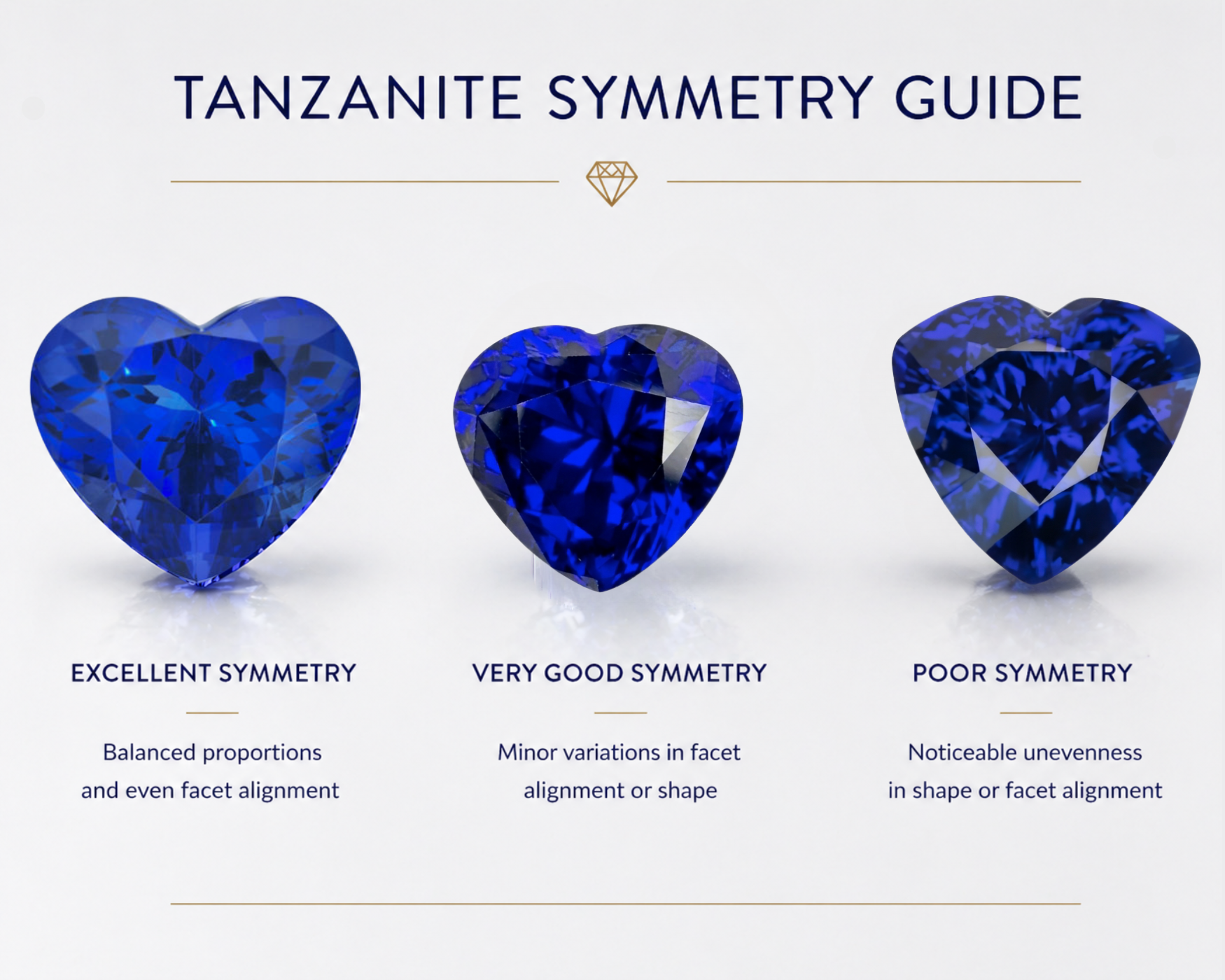
A well-cut tanzanite displays its color at its very best, appears symmetrical when viewed from above, and reflects light at the correct angles to create brilliance and sparkle.
An uneven outline or wiggly sides can indicate a less precise cut.
Keep in mind that gemstone photos are highly magnified—often much larger than the stone appears in real life—so minor cut variations can look more pronounced online than they actually are in real life.
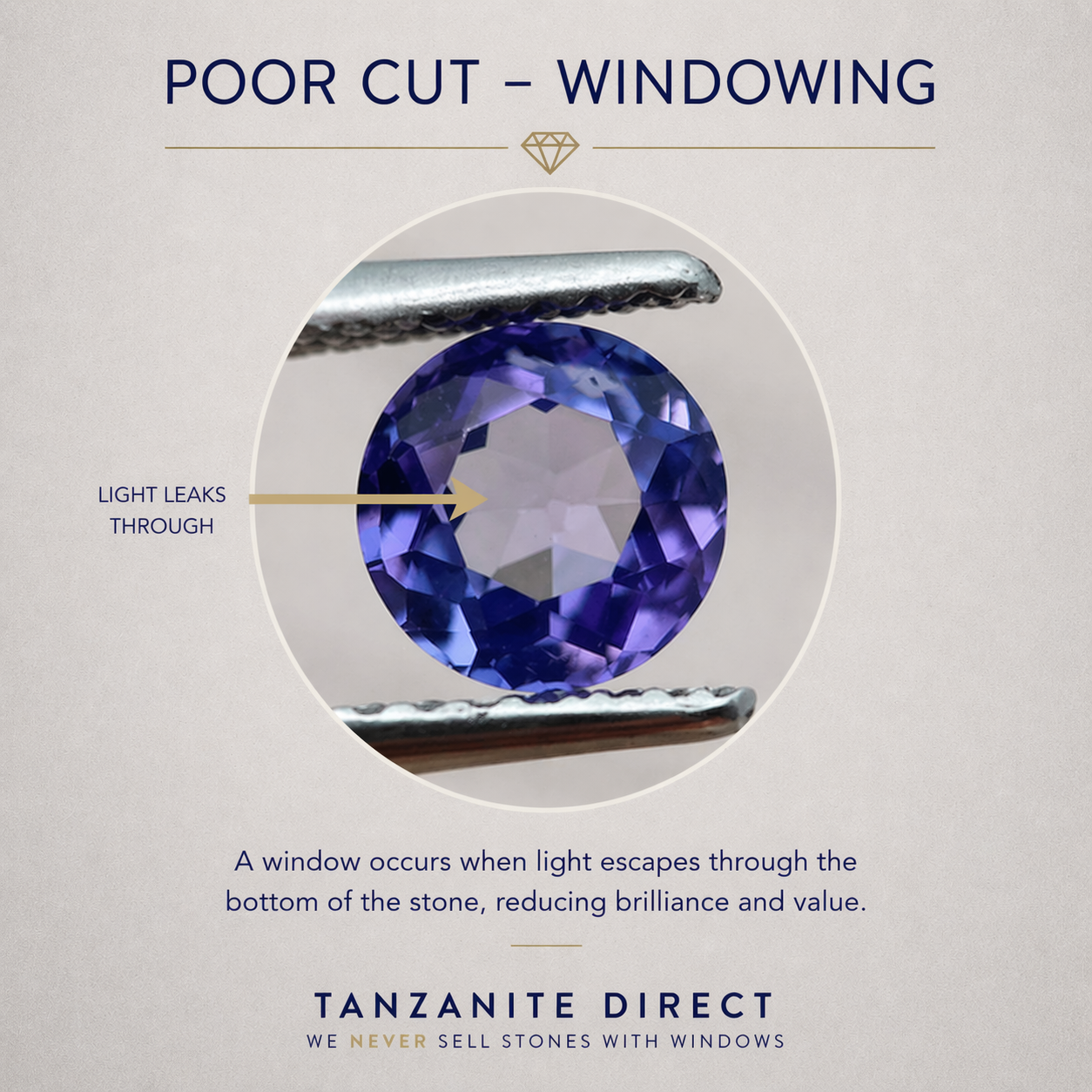
Windows - sign of a poor cut
A window in a gemstone is a big “see-through” area typically visible in the center of a faceted stone. It is caused by a shallow or poorly executed cut.
Rather than reflecting light back to the eye, the stone allows light to pass straight through, resulting in a dull, washed-out appearance with a noticeable loss of depth and color.

underneath your stone
The lower portion of a gemstone is called the pavilion.
Diamonds typically have a consistent, pointed pavilion shape, whereas coloured stones—including tanzanite—have more rounded and varied pavilion shapes. No two are exactly the same.
If the pavilion is cut too shallow, the stone can appear washed out, creating a “window” where light escapes instead of reflecting back to the eye.
A deeper pavilion can intensify color—often beautifully so. However, this added depth means the stone will require a higher setting, so rings and pendants are designed to sit slightly taller to accommodate it properly.