Is D Block Tanzanite Better ?
What “D Block tanzanite” really means—and what it does not
 After working at the TanzaniteOne mine and spending years visiting the slopes, tunnels and sorting rooms of Merelani, I thought I understood most of the legends surrounding tanzanite.
But one myth has proved particularly indestructible:
D Block tanzanite is always the best.
It sounds wonderfully convincing. “D Block” has acquired the air of a secret designation—as though it were the tanzanite equivalent of a celebrated vineyard, producing stones with a pedigree that the other blocks simply cannot match.
There is only one problem.
D Block is a mining location, not a quality grade.
Exceptional tanzanite has been found in D Block. It has also been found in the other blocks. A stone does not become finer simply because someone attaches the words “D Block” to it.

What is D Block tanzanite?
Tanzanite is found commercially in only one place on Earth: the Merelani mining area in northern Tanzania, close to Mount Kilimanjaro.
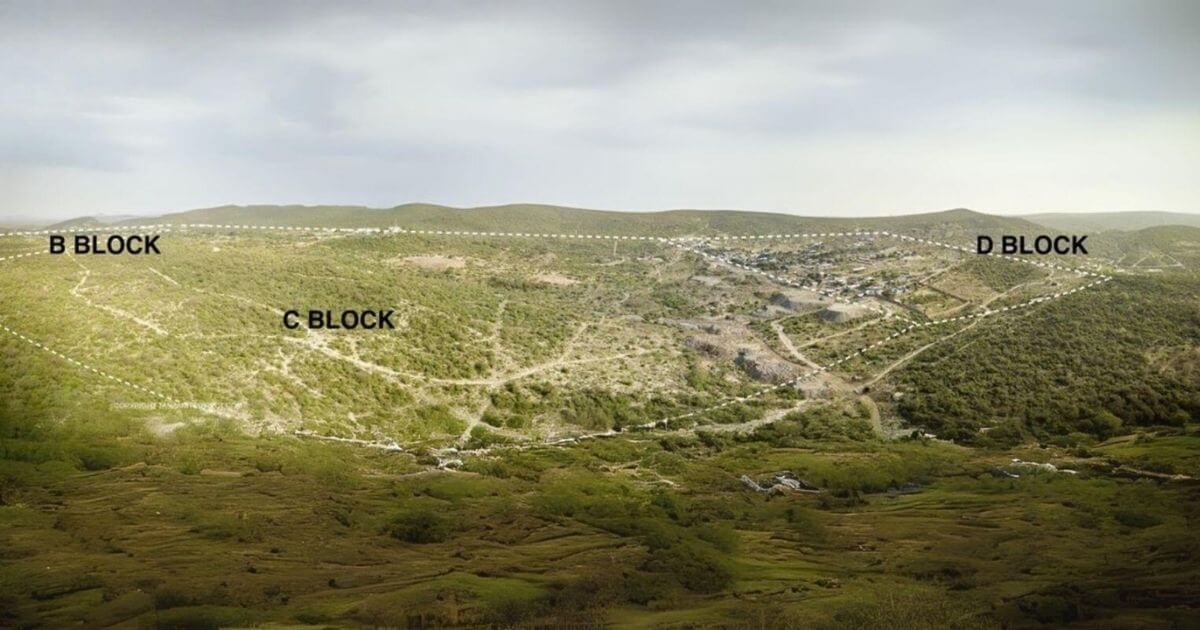
The deposit occupies a remarkably narrow strip of ground. In 1990, the Tanzanian government divided the mining area into four administrative sections—Blocks A, B, C and D—to allocate mining rights and regulate different operators.
Those letters describe mining concessions. They were not created as a geological ranking system, and they do not correspond to four official grades of tanzanite.
Historically, Block C became associated with larger-scale, mechanized underground mining, including the TanzaniteOne operation where I worked. Blocks B and D were largely worked by smaller-scale and artisanal miners, using a very different network of shafts and tunnels.
That difference in mining style is real. A guaranteed difference in gemstone quality is not.
Where did the D Block legend come from?
Like most good gemstone stories, the D Block legend probably contains a mixture of history, observation and embellishment.
The tanzanite-bearing mineralized zone is steeply inclined, dipping underground at an average angle of about 41 degrees. In the earliest years of mining, stones were recovered much closer to the surface than they are today, and some were already blue when found.
This became intertwined with the famous story of a bushfire sweeping across the Merelani Hills and transforming brown zoisite into brilliant blue tanzanite. Heat really does remove much of tanzanite’s brownish component and reveal its blue and violet colors. However, the bushfire explanation remains part of tanzanite lore rather than a scientifically proven account of why particular stones were blue.
Natural geological heating can also produce blue tanzanite underground. And many stones mined from every part of Merelani emerge with brown, greenish or burgundy tones before being carefully heated.
Some early, naturally blue stones may have entered the market from the area later known as D Block. Those memorable stones could easily have helped create its reputation. Over time, a historical association became a sales claim—and the sales claim gradually began to sound like a gemological fact.
It is not.
Can a gemological laboratory identify D Block tanzanite?
No reputable gemological laboratory can examine a loose tanzanite and reliably determine that it came from D Block rather than Block A, B or C. They are all part of the same single deposit, and there is no tiny postcode inside each tanzanite which even if examined carefully can let us know where it was formed.
This does not mean every seller using the term is being deliberately misleading. In parts of the trade, “D Block” has become informal shorthand for tanzanite with especially deep, saturated blue-violet color.
But that is marketing language—not a standardized gemological grade.

Is D Block tanzanite naturally darker or bluer?
Not automatically.
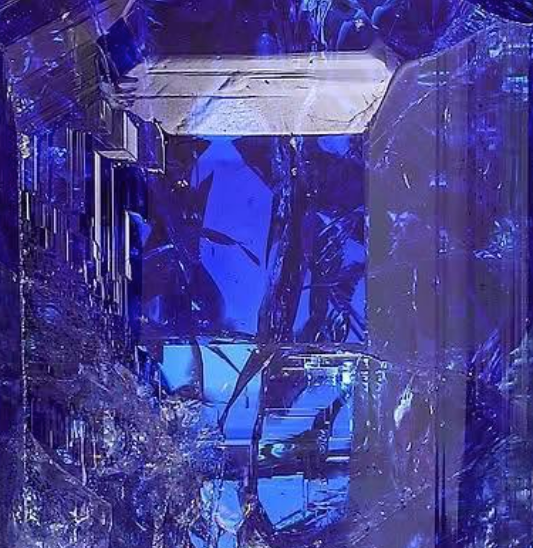
Tanzanite forms in irregular pockets within a complex geological environment. The crystals from a single pocket can vary dramatically in size, clarity, color and crystal orientation. One pocket may produce exceptional material; the next may produce little of gem quality at all.
This variation happens throughout the Merelani deposit.
I have handled many thousands of tanzanites, including extraordinary stones from the mechanised Block C mine. I have also seen wonderful material from the artisanal mining areas. Fine tanzanite is not loyal to an administrative boundary drawn on the surface decades after the crystals formed.
The Earth did not know where the Tanzanian government would eventually place the line between Block C and Block D.
So, is D Block tanzanite better?
No—not simply because it came from D Block.
D Block has produced some superb tanzanite and fascinating mineral specimens. Its artisanal mining history is an important part of the story of Merelani, and a stone with genuine, documented provenance from a particular mine may be especially interesting to a collector.
But the words “D Block” do not guarantee superior color, clarity, cut or value. Nor do they make an ordinary stone extraordinary.
After years at the mine, repeated visits underground and thousands of stones passing through my hands, my advice is very simple:
Buy the tanzanite, not the mythology.
Judge it by its color, clarity, cut and beauty. Ask for reliable gemological information, deal with someone who knows the material, and be wary of paying a premium for a block origin that cannot be independently verified.
Because the finest tanzanite does not belong to a letter of the alphabet.
It belongs to the stone in front of you.

What actually determines tanzanite quality?
If you want to know whether a tanzanite is exceptional, *look at the stone — not the label attached to it.
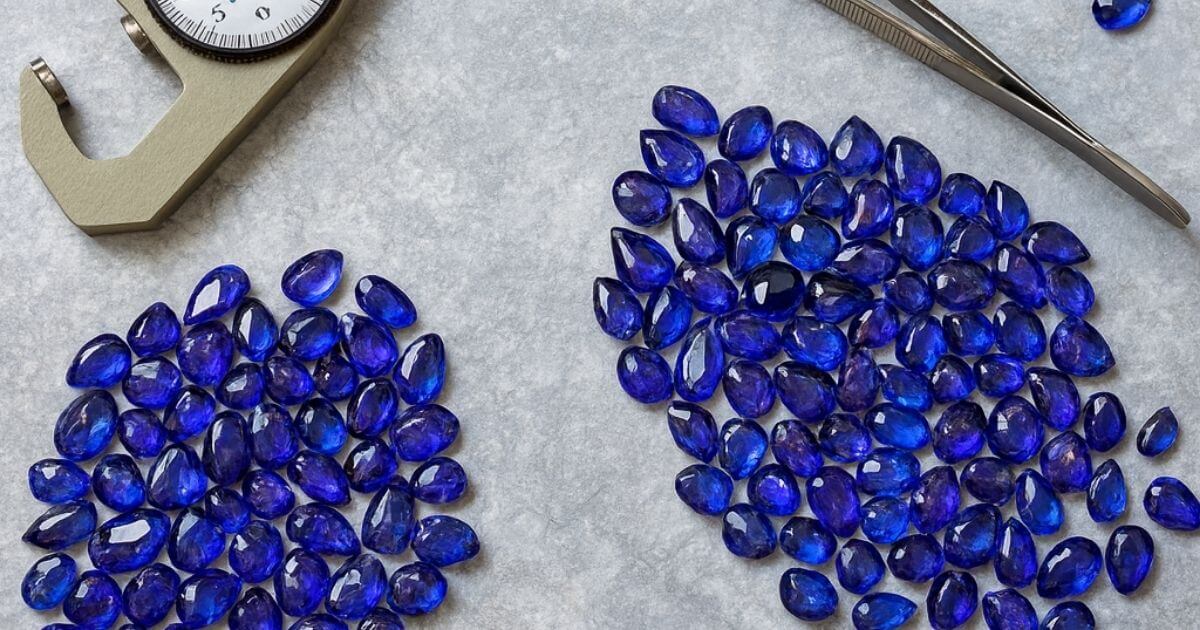
Color, clarity, cut and carat weight are the things that matter. These are qualities you can actually see, examine and compare. “D Block,” in most cases, is simply a claim you cannot independently verify.
A final note — let us do the hard work for you
If you want an exceptional tanzanite but don’t happen to be a gemmologist, ask Linda, our GIA-trained gemmologist and the author of this article, to choose one for you.
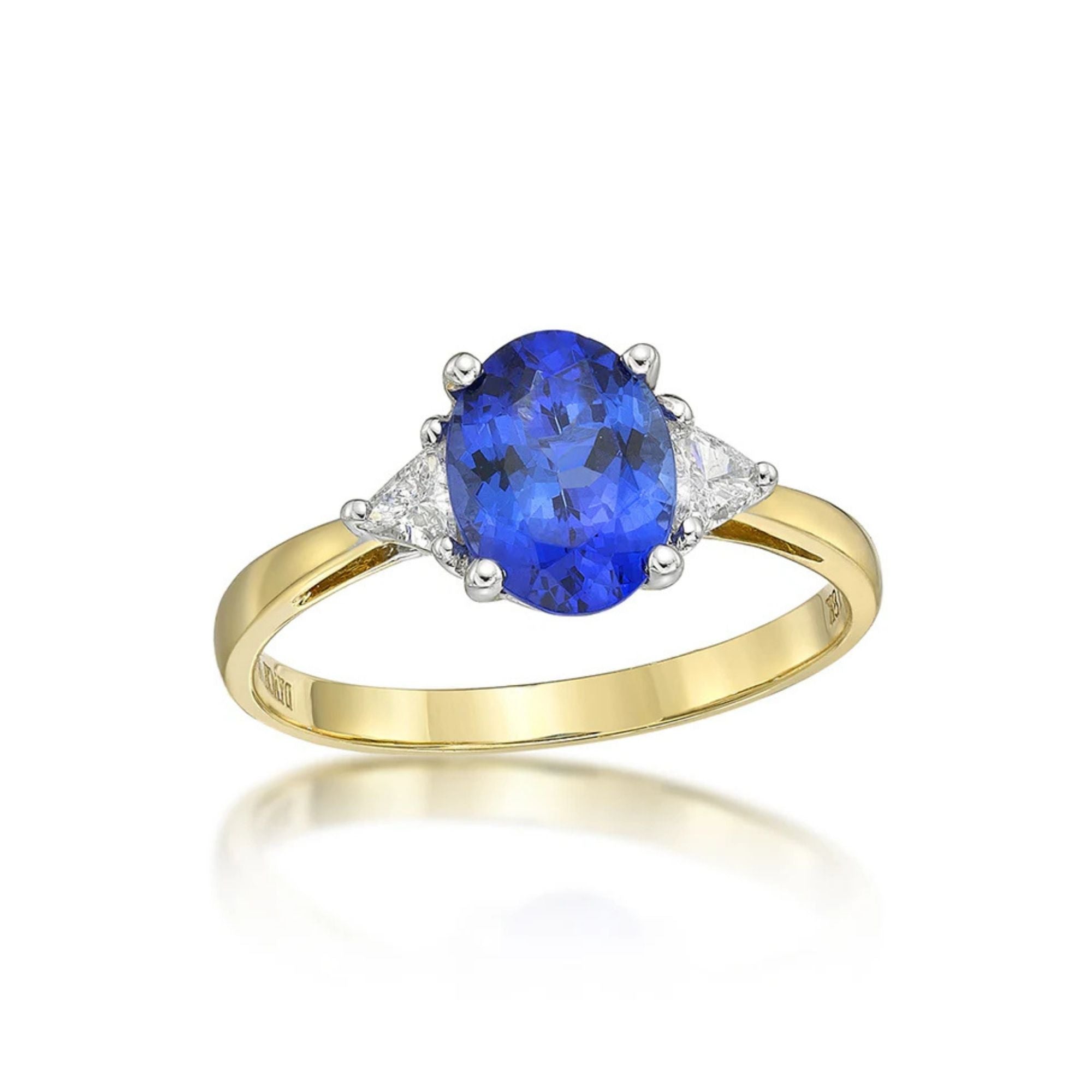
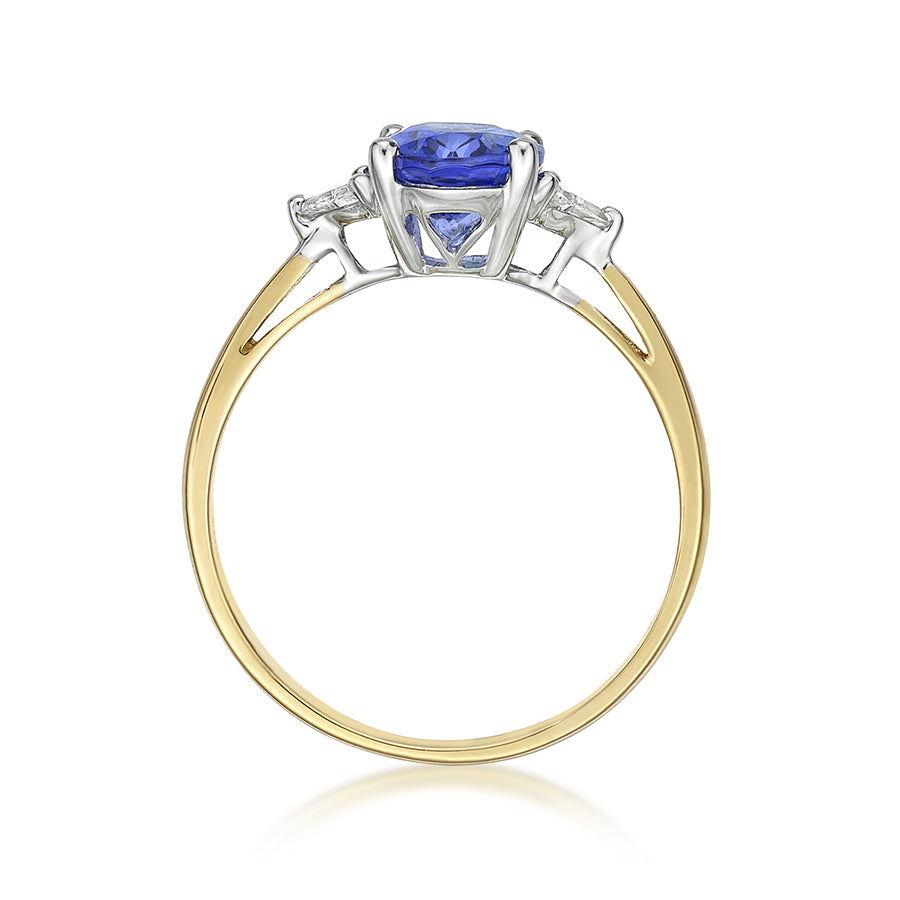
Linda has personally selected the tanzanites offered on TanzaniteDirect for their standout colour, clarity, cut and overall beauty. In other words, much of the hard work — comparing stones, rejecting the ordinary ones and identifying the exceptional ones — has already been done for you.
Shop Expertly Selected Tanzanite Here
And remember, only a tiny fraction of our tanzanite inventory ever makes it onto the website. If you are looking for a particular size, shape, colour, budget or something genuinely exceptional, tell us what you have in mind and Linda can personally search our wider inventory for you.